Fence Company Solutions for Tight Spaces
There is an unique kind of frustration that strikes when you try to put a fencing where a fence has no company installation. A slim side backyard that the landscaper already "intended to clean up later." A yard gateway that opens into a patio wall surface. A corner lot where the home line feels like a rumor. When you are working in tight spaces, the normal playbook begins to break down, and the choices you make very early figure out whether the ended up fence looks willful or seems like an afterthought.
That is where a fence company that lives in the real world matters. Not just the rates, not simply the sales brochure images. I indicate the team that gauges twice, talks with restrictions without rolling their eyes, and recognizes how to develop something clean when there is barely room for the messages, the hardware, and the inevitable "oh, the slab is really here" moment.
This is a long read, but it is meant to be useful. I will certainly go through the challenges of tight rooms, what to look for in a fence company, and the construction techniques that avoid the most common headaches.
Tight-space fence is much less about design and more concerning physics
In a wide-open yard, you can pick materials and spacing and let the fencing land where it lands. In a slim area, every little thing is determined in inches, and inches have actually consequences.
Think about post positioning initially. A common fence message requires a solid foundation and sufficient space for proper excavating, setup, and backfilling. In a slim side lawn, you could have roots, irrigation lines, energy access, a buried drainpipe, or just a hardscape that rejects to move. If the post winds up too close to a foundation wall surface, a fencing line that was expected to be straight starts to "creep" throughout installation.
Then there is the hardware reality. Gates, particularly, have a minimum move and clearance. You need room for hinges or braces, for the lock to align, and for the gate to turn without scraping a wall or hitting a lawn chair that someone stubbornly leaves in the very same area everyday. In limited areas, a gateway that technically fits on paper can still fall short in real life because the swing arc runs into an unforeseen obstacle.
The last physics item is wind and load. In narrow corridors, fencings can take wind that channels with the room. If you are constructing a tall panel system or using larger products, the added anxiety adjustments how dental braces and messages ought to be sized and spaced.
A fence company that comprehends these realities will ask far better concerns than "what design do you want?" They will certainly ask where the gate needs to go, just how the residential or commercial property line is marked, where the utilities run, and what you utilize the room for. Are you car parking something there? Do kids run through it? Is it a dog path? Those details figure out whether you prepare for sturdiness, exposure, or a smoother upkeep approach.
The measurement difficulty: it is never simply "from line to line"
Tight-space secure fencing usually starts with a study that you thought you did not require. Several house owners have an obscure sense of where the residential property line sits, normally because neighbors' fences exist and the whole lot "really feels" consistent. However a couple of inches of error ends up being evident when you are trying to align a fence with an entrance, a pathway side, or a stonework wall.
Here is how I have actually seen it play out on real installs. A home owner demands a straight run, and the team does a field dimension that matches the property line pins carefully. The fencing goes in looking excellent. After that, a week later on, eviction does not latch cleanly. Not since the hinge damaged, but due to the fact that the fence line was set to a straight side that was precise to the dimension tape, while the gate needed alignment based on a various recommendation factor, like a concrete pad edge that is slightly out of square. In a limited area, little imbalances show up and useful issues appear fast.
A great fence company treats references as a decision, not a shock. They decide early what will certainly control the placement. Often it is the home line. Sometimes it is a clear functional alignment like the existing fence face, a sidewalk line, or the straightest surface that keeps the gate workable. The secret is that you make that selection knowingly, not accidentally.
In numerous instances, you additionally want to decide exactly how to manage the inevitable variant along a "straight" boundary. Fencing runs in real backyards bend due to the fact that the ground flexes, because the foundation is not a best rectangular shape, or due to the fact that the dimension path needs to dodge something. A professional staff can maintain the fencing looking intentional by utilizing regulated offsets and constant panel lines instead of requiring a straight course via an obstruction.
Post spacing and foundation options when you can not "dig like typical"
When room is tight, you might not have the deluxe of digging a broad ground at the specific place you desire. Depending upon local method and dirt problems, the structure method changes.
Typical methods may consist of concrete grounds, direct-burial techniques, or different systems like pin-set post bases. For tight spaces, the goal is normally the same: safeguard the message, maintain the fence lined up, and avoid damaging close-by surfaces or utilities.
A fence company worth your time does not deal with foundation as a checkbox. They examine dirt stability, distance to frameworks, and accessibility for equipment or augers. If you have a concrete patio just a couple of feet away, mechanical excavating can come to be a problem. In some installs, smaller devices or hand digging near a wall surface is the more secure path, even if it is slower.
Also, consider frost and water drainage problems where you live. If you remain in a freeze zone, the structure needs to be mounted below frost depth for regular performance. That might influence how close the message can be set to a slab or how you handle water circulation around the base.
The functional compromise you will certainly see is this: tighter constraints frequently reduce adaptability. You could pay more since the team spends added time gauging, switching methods near blockages, or installing articles in such a way that stays clear of damage.
Materials that play well with limited corridors
People frequently request for the "finest" fence, as if there is one. In tight areas, the very best fencing is the one that matches the atmosphere and the method the area is used.
Here are common classifications and just how they act in constricted areas.
Wood, plastic, and composite: traditional looks, cautious planning required
Wood fences can be adjusted to several formats, which is why they are prominent. In a narrow yard, timber's adjustability assists when you need mild offsets to clear a wall or dodge landscaping. However, wood additionally requires maintenance. If the fence is in a high moisture area, or shaded heavily, you could plan for discoloration or sealing more frequently.
Vinyl and composite systems can really feel more "set and fail to remember." They additionally hold up well against rot. The catch is that several vinyl panel systems are created around basic spacing and placing methods. In tight areas with regular blockages, the installation might need even more thorough planning to stay clear of forced cut-offs that look jagged or weaken the panel layout.
One point I such as to inform homeowners is that "reducing" is not the same as "style." A fencing that needs to be cut repeatedly might still function structurally, however you desire the visual to look calculated. A good fence company can intend panel designs prior to installment so wood fencing contractor the visible components look well balanced, not random.
Metal and light weight aluminum: strong lines, often better for narrow gaps
Metal fencings have a tendency to be constant in their structure geometry. Light weight aluminum fences, in particular, can work well where you want presence and a lighter aesthetic impact. They also manage tight runs well because the system is less likely to warp during installation compared to boards that broaden and contract.
Steel or wrought-style fence can likewise function, however you should take notice of weight and mounting. In slim rooms, the gate equipment and latching alignment become much more crucial because people make use of that hallway as a sidewalk, and any kind of sticking ends up being bothersome fast.
Chain web link: the utility champion with less design surprises
Chain link is typically the underappreciated alternative for limited rooms. It is not only cost-effective oftentimes, it also adapts to strange lengths because the fabric can be tensioned. Articles still require proper structures, however the panel positioning issues are various than with rigid panels. If a fence company is experienced with chain link, they can make it look cool also when the surface is messy.
The compromise is appearance. If the limited room belongs to a front-facing location or you want a solid visual obstacle, chain web link might not please your objectives unless you combine it with personal privacy slats, testing, or landscaping.
Gates in limited spaces: where styles do well or fail
An entrance is the crucial moment. A fencing line can look acceptable also if it is off by a half inch, yet a gateway catches the eye and it is regularly being used. In tight spaces, gate issues often tend to come under a couple of foreseeable categories: clearance, placement, and lock placement.
If your gate swings right into a wall or near a door, the joint choice matters. Some pivot systems allow for more countered, which can create added clearance. If you are close to a home window or eave, you might need custom spacing to maintain the swing arc clear.
Then there is the question of whether the gate need to be completely solid, partly open, or have a narrower structure. Solid gates can be much heavier, which increases stress and anxiety on joints and locks. In a limited area, you might desire a lighter gateway system also if it implies readjusting just how exclusive the opening feels.
Here is a useful anecdote from a work I enjoyed. The property owner wanted a conventional wood gateway with complete privacy slats. The opening was slim, and the gate swing was already near to a patio step. Throughout setup, the staff saw eviction would scuff the step with the existing hinge positioning. They can have compelled it, yet that would have assured wear and misalignment in a few weeks. Rather, they repositioned the joint to change the swing arc and readjusted latch placement so the gate shuts easily without dragging. The gate looked the exact same from a distance, yet up close, it was plainly established for real-world use.
A fence company should treat gateway fit like an accuracy work, not a second thought. If they rush the gate positioning, you will certainly feel it each time you stroll through.
The concealed constraints you discover after you commit
Tight areas love to disclose "shocks," and the majority of them are not significant. They are simply inconvenient.
Sometimes it is a sprinkler head that rests where a blog post needs to go. In some cases it is a drain line that runs along the boundary. Often it is hidden landscape design textile or a rock rack that transforms excavating into a slow-moving hand-drill exercise.
This is why I advise you assume beyond the fencing itself. Before installation, walk with a notepad or phone notes and mark the apparent barriers. Search for lawn sprinkler spray patterns, check where downspouts empty, and notification where pipes or wheelbarrows must pass. If there is a fence gate, map the path you really walk, not just the path you would love to walk.
A percentage of intending conserves a great deal of routine discomfort. It can additionally prevent unsightly remedies like relocating the fencing line in a manner that makes the design really feel crooked.
If you desire a simple pre-install list, utilize this. Keep it practical and neighborhood, and readjust based on your situation.
- Confirm home line markers or study assistance where offered
- Identify lawn sprinklers, irrigation lines, water drainage runs, and any well-known utility accessibility
- Decide which placement referral manages the run and eviction swing (property line, fencing face, or a straight hardscape edge)
- Measure gate opening up clearance with the gate swing path in mind, not just the latch factor
- Photograph the area prior to work begins so later questions are very easy to fix
What to expect from a fence company that handles limited areas well
You can find out a whole lot about a service provider from exactly how they discuss restrictions. The best fence company conversations do not just focus on style choices, they concentrate on process, trade-offs, and exactly how they deal with unpleasant sites.
Look for these signs.
First, they must fit talking about designs and panel strategies. Ask just how they intend to place blog posts relative to frameworks, and just how they handle uneven surface. If they inform you "we will figure it out when we arrive," that is not self-confidence, it is a gamble.
Second, they should be clear regarding access. Limited spaces occasionally restrict devices. If a team requires a path vast sufficient for an auger or a wheelbarrow and you do not have it, the install method modifications. A specialist company will mention this very early, not make believe the site is open.
Third, they should understand just how to safeguard surrounding surface areas. When a blog post is near a slab, a deck, a foundation wall surface, or fully grown landscaping, the installment needs mindful staging. You do not want fencing work that swellings plants, scuffs pavers, or develops damages that the home owner has to challenge later.
Finally, they should talk with coating quality in constricted locations. In vast runs, you can conceal imperfections with range. In tight areas, every positioning line is close to eye level. A respectable fence company will certainly set expectations regarding exactly how noticeable the fencing will certainly be from typical watching angles.
Choosing privacy and visibility without destroying clearance
In slim side yards, personal privacy is often the goal, yet there is a fine line in between privacy and functionality. A completely strong, high fence can make the hallway seem like a passage and can decrease sight lines for pedestrians. It can also create wind pressure on the fence face.
If you are stabilizing privacy with air movement, think about layouts that enable some openness. For example, a mix method commonly works: utilize solid panels where privacy matters most, and use a much more open style near locations where you need presence or where wind pressure could be an issue.
Also, think about landscape design as a partner, not a second thought. In limited areas, a fencing that is "virtually exclusive" can end up being truly private once you add a planted display that becomes the void. But plants need time. If you want privacy right away, you will require the fencing to do even more of the work.
When a fence company offers versatile format options, it is usually since they have actually developed this kind of backyard prior to. They may recommend specific panel designs, entrance placements, or product options that make privacy feel deliberate as opposed to forced.
The 2 most usual setup errors in tight spaces
Mistakes are not constantly significant. They are simply repeatable, which is why they are avoidable.
The initially error is overlooking eviction swing and latch positioning till the end. In tight areas, gateway clearance issues end up being noticeable just after the hardware is installed. Already, the crew might change with shortcuts that create future issues, like misaligned latches that call for constant tweaking.
The second error is requiring the fence to follow a line that passes too near to structures. When posts are established with minimal clearance, you can create long-lasting wear. It may appear as swelling timber boards scrubing a wall, vinyl panels bowing under stress and anxiety, or hardware loosening due to the fact that the fencing line is not absolutely stable.
The fix for both problems coincides: purposeful preparation and straightforward site evaluation. A fence company that deals with tight spaces well brings technique to the measurement process and values just how entrances and articles act over time.
Cost fact: tight space job generally sets you back much more, however it should be explainable
Pricing for fencings differs extensively, but limited rooms add price for easy to understand factors. The staff may invest even more hours determining, doing careful digging, switching over installation approaches near challenges, or customizing formats to keep the fence straight and eviction functional.
When you get quotes, ask concerns that expose whether the quote make up the restrictions in your yard. For instance, if the fence path needs specialized blog post placement near a foundation or a slab, you need to anticipate the setup technique to vary. If a gateway is entailed, you should anticipate the equipment and alignment work to be component of the pricing.
What you do not want is a quote that assumes a "normal yard" however after that depends on improvisation later. An excellent fence company can usually discuss why the install is extra complicated, and they can connect that intricacy to certain site features.
If you listen to positive uncertainty, that is a warning. If you hear a clear description tied to dimensions, obstacles, and process, you are in much safer territory.
A fast guide to choosing the appropriate fence kind for your specific constraint
Sometimes you do not require a whole redesign, you require the best suit for the constraint that matters most. Limited rooms tend to have one dominant restriction, like limited size, heavy exposure needs, or regular access through a gate.
Below is a compact means to assume it via. No universal solutions, simply useful direction.
- If you require optimal adaptability around obstructions, chain web link frequently adapts more quickly to uneven runs
- If you desire a lighter appearance and excellent visibility, aluminum or open metal styles typically manage narrow sightlines well
- If you prioritize traditional personal privacy and can plan for upkeep, timber can be a strong fit when formats are calculated carefully
- If you desire lower upkeep with a tidy aesthetic, plastic or compound can work, but panel format planning comes to be more crucial
Living with the completed fencing: little practices that avoid future trouble
Once the fencing is installed, tight areas still require interest. The fence is not simply an item, it becomes part of your day-to-day movement.
If you have a gateway, maintain it lined up by utilizing it similarly every time. Slamming an entrance in a slim passage can swiftly loosen hardware, particularly on much heavier solid gates. If you discover a latch not capturing cleanly, address it early instead of waiting up until it starts scraping.
Also, expect water issues at the base of articles. Limited yards can channel drainage towards one side, particularly if there is an incline. If water swimming pools around blog post locations, timber elements can deteriorate faster, and metal hardware can wear away earlier depending upon your climate.
Finally, do easy seasonal checks. In winter season, try to find heaving near bases. In spring and summer, look for soft spots, leaning posts, or drooping panels. A fence company might supply a maintenance suggestion, but your ideal line of protection is noticing adjustments early.
When you need to think about a fallback before the first blog post is set
Sometimes one of the most adventurous thing you can do is not compel the original idea. Tight areas may require a change in layout, product, and even the area of the gate.
If you have a hallway that should continue to be useful for accessibility, consider whether a narrower gate, a various swing instructions, or a different fencing line positioning would preserve function. If you have a residential or commercial property limit that is vague, consider stopping up until you can validate the line. A fencing that is integrated in the wrong place can develop neighbor disagreements and costly rework.
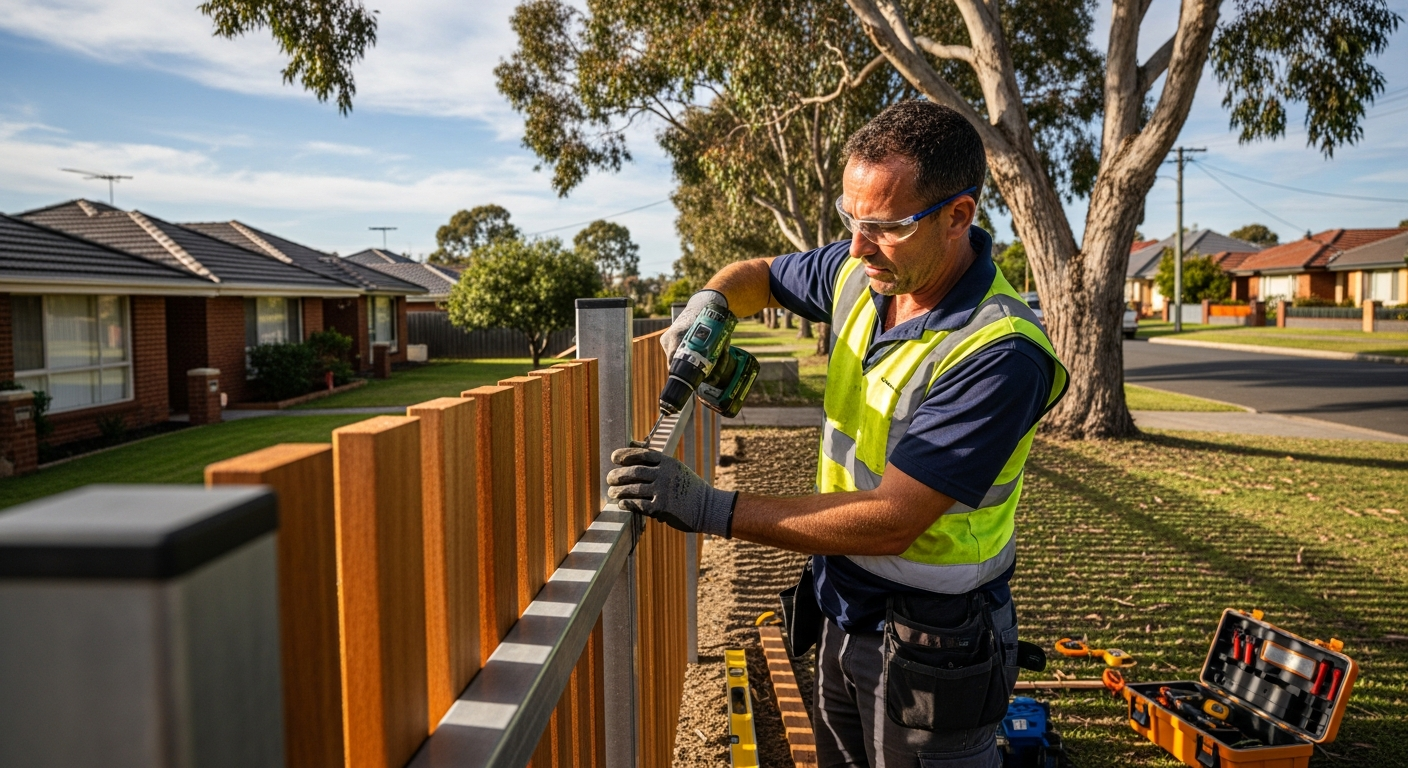
And if you have a site with really extreme constraints, ask your fence company about alternate systems. Direct-burial techniques, alternative post bases, or modular panel systems might make more feeling than attempting to force a standard layout into a space that will combat you.
The daring component: making a tight yard feel intentional
There is a minute when a tight fence work transforms from "problem site" right into "genuine renovation." It typically occurs when the gate swings efficiently, the fencing line looks straight to the eye, and the corridor finally feels like it belongs to your home as opposed to being a slim leftover.
The distinction comes from preparation. A fence company that can deal with tight areas brings that planning right into dimension, post positioning, entrance alignment, and material option. They do not simply build a fence, they build a functioning boundary that fits the life around it.
If you are dealing with a slim side backyard, an uncomfortable corner, or a fence run that looks like it hardly exists, take it as a design chance. Go in with clear expectations, ask the appropriate concerns, and insist on positioning choices early. Tight areas compensate the careful and the sincere. When you obtain it right, the ended up fencing does not really feel confined. It really feels specific, solid, and remarkably confident.